Bargaining on a Cruise: How to Negotiate the Right Way
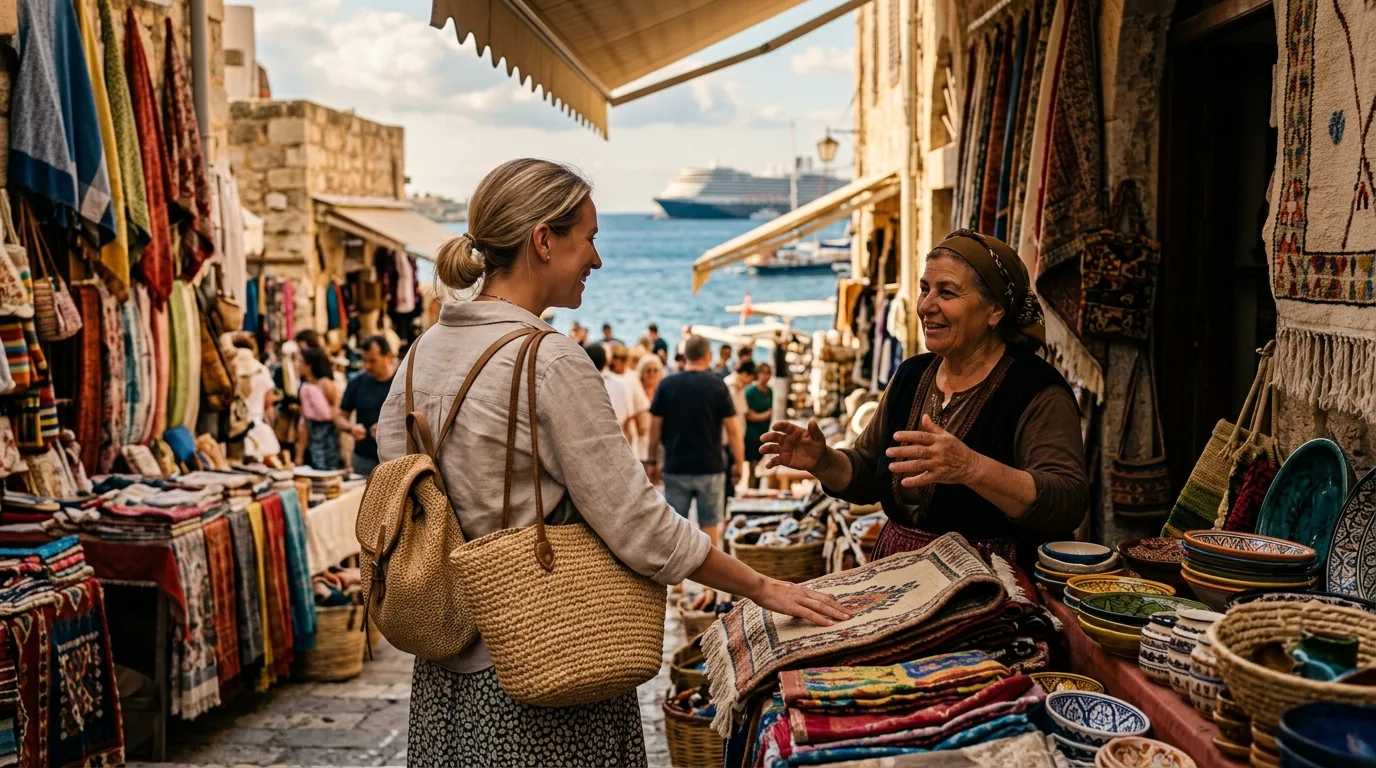
When you travel the world on a cruise ship, you step ashore in a wide variety of ports. Local markets, colorful bazaars, and small boutiques entice you with handmade souvenirs, spices, and traditional local crafts. But when it comes to paying, the question quickly arises: Is the price fixed, or is bargaining considered good manners here?
In many cultures, bargaining is not just haggling over the last cent, but a social ritual. If you know the unwritten rules of bargaining, you will not only save some money for your travel budget, but often also experience particularly warm encounters with the local people.
Where bargaining is a must – and where it is taboo
Before you dive into your shopping adventure, you should know the regional differences. In the bazaars of the Orient, in many countries of North Africa, as well as in the markets of Asia and Central America, negotiating is a firm part of the culture. Here, initial prices are deliberately set high because the merchant expects you to bargain them down. Anyone who pays the full price here without hesitation is often even considered impolite or uninterested.
In other regions, however, you should be careful. In Northern and Western Europe, in the USA, and in Australia, fixed prices are the absolute rule. Bargaining here is quickly perceived as stingy or even disrespectful. The only exceptions are flea markets or the purchase of very expensive individual items such as high-quality jewelry.
The golden rules for successful negotiation
To ensure that bargaining is a positive experience for both sides, a few simple rules of conduct will help:
- Stay friendly and respectful: A smile is your best currency. Negotiating is not a battle, but a conversation on equal terms.
- Do not show interest too early: If you spot an object of desire, look at other things first. Anyone who grabs an item immediately with enthusiasm signals to the merchant that they will pay any price.
- Leave the first step to the merchant: Ask for the price instead of making an offer yourself.
- Half as a guideline: As a rough rule of thumb in traditional markets: offer about half of the stated price as a counter-offer and meet in the golden middle in the end.
- Only bid if you actually want to buy: As soon as the merchant accepts your offer, the deal is considered sealed with a handshake. Backing out after that is an absolute no-go.
Cleverly avoiding typical tourist traps
Especially near the port, many shops have adapted to cruise passengers. Be careful not to fall into the typical traps. A popular method is creating artificial time pressure – often by pointing out that the ship is leaving soon. Do not let this stress you out. Instead, use your PortStory app to keep an eye on your port time so you know exactly how much time you really have left for a relaxed stroll.
In addition, you should beware of supposed gemstones or antiques offered on the street. If an offer sounds too good to be true, it is usually a fake. Only buy expensive valuables in certified shops.
What to watch out for upon return: Customs and onboard rules
The purchase is done, but what happens next on the ship? Here, it is important to observe both the legal customs regulations and the rules of the respective cruise line.
When importing goods into the EU, there are strict allowance limits for the total value of your purchases. Anyone exceeding these must declare the goods at customs. It is absolutely forbidden to import counterfeits (brand fakes) for commercial purposes, as well as souvenirs covered by the CITES agreement on endangered species – this includes, for example, shells, corals, ivory, or products made of tortoiseshell.
In addition, each cruise line has its own safety regulations regarding what may be brought on board. Large art objects, traditional weapons (such as decorative swords or knives), or certain food items and alcohol are usually not allowed in your cabin. These items will be confiscated by security staff during boarding and kept safe until the end of the cruise. Check your cruise line's guidelines in advance to avoid surprises at the gangway.