Safe Through the Storm: How Captains Navigate in Autumn
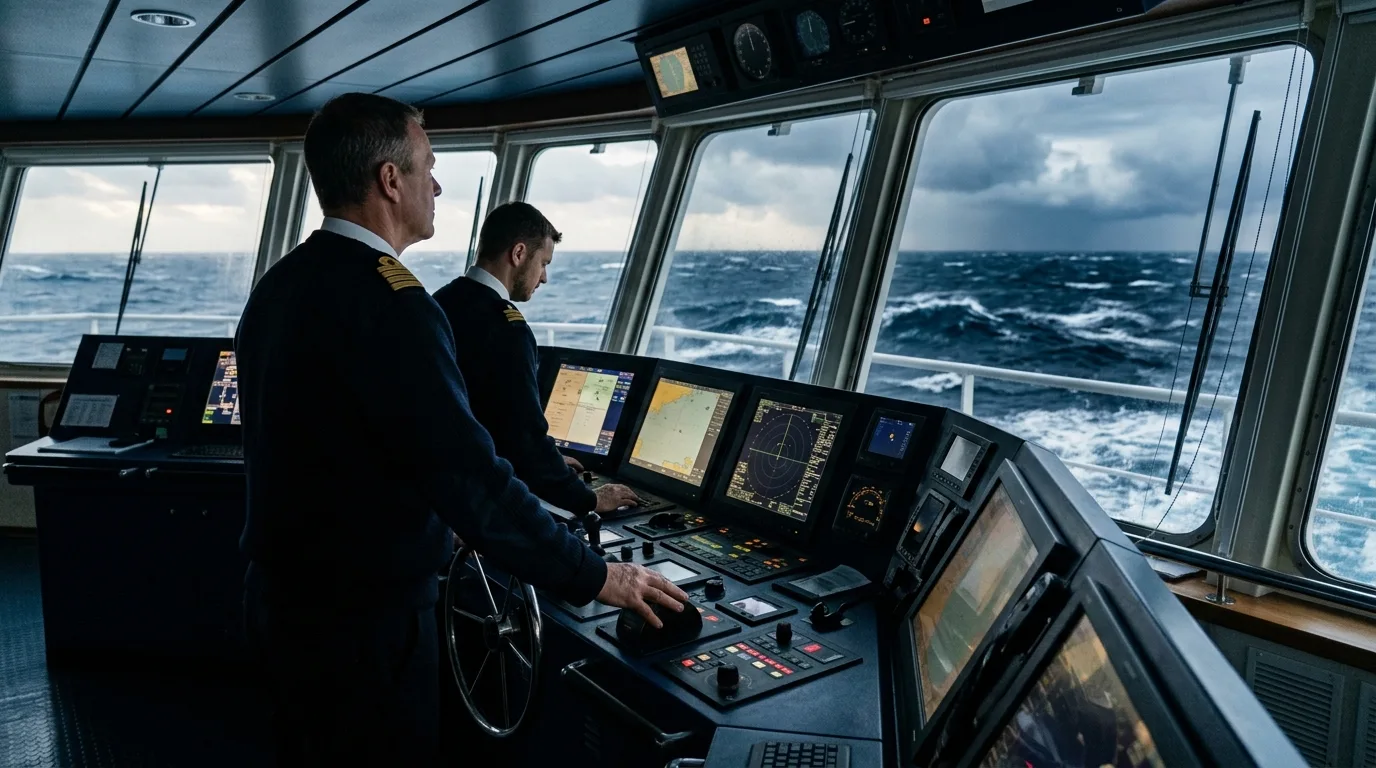
Safety First: The Bridge on Constant Weather Watch
Autumn often brings unsettled weather, but modern cruise ships are perfectly equipped for this season. The ship's command leaves nothing to chance. Highly precise satellite data and weather forecasts stream onto the bridge around the clock. Captains and their nautical officers use state-of-the-art route planning systems to steer clear of low-pressure areas and severe storms well in advance.
If a storm brews, the itinerary is flexibly adjusted. This can mean skipping a port, swapping the order of stops, or adding an extra day at sea. Even if a change of route can be disappointing at first: the safety of the passengers and crew is always the top priority for the ship's command. By the way, you can also track your ship's current position and route live at any time in the PortStory app to stay in the loop.
High-Tech Against the Sway: How Stabilizers Work
To ensure the journey remains comfortable even in rough seas, modern cruise ships are equipped with so-called stabilizers. You can think of these as retractable underwater wings that extend from the sides of the hull.
Sensors on board register every movement of the ship in milliseconds. The stabilizers automatically adjust their angle to the wave motion, creating counter-pressure. This minimizes the side-to-side rolling of the ship extremely well. Often, you will barely notice the waves inside the ship while the spray is splashing outside.
The Most Stable Places on Board in Rough Seas
Should the ship still sway noticeably, there are physical laws that help you feel the movement as little as possible. The ship moves around its own center of gravity.
- In the middle of the ship (midships): This is where the up-and-down movements are at their lowest. If you are sensitive to sea motion, this is the best place for you.
- On the lower decks: The lower down you are in the ship, the less you will feel the side-to-side swaying (rolling).
- Cabin selection: If you are prone to seasickness, we recommend booking an inside or outside cabin in the midships area on one of the lower passenger decks.
You should avoid the very front (bow) and the very back (stern) of the ship, as well as the uppermost decks during rough seas, as the movements are felt most intensely there.
Practical Tips for Stormy Days
When the sea gets rough, life on board adapts too. With these tips, you will get through the day just fine:
- Focus your gaze: If you start to feel uneasy, it often helps to focus on the horizon. This brings the signals from your eyes and your inner ear back into harmony.
- Fresh air: A short walk on the permitted open decks can work wonders. However, make sure to pay close attention to any barriers.
- Follow the safety rules: In rough seas, the cruise line may close certain outdoor areas, pools, or upper decks for safety reasons. These rules vary depending on the cruise line and weather conditions – in your own interest, always strictly follow the crew's announcements and the barriers.
- Medical assistance: Guest services or the onboard medical center usually have effective remedies for seasickness available. Do not hesitate to ask for them in good time before the nausea really sets in.