Doctor on Board: Medical Care on the High Seas
A Look Behind the Scenes of the Ship's Hospital
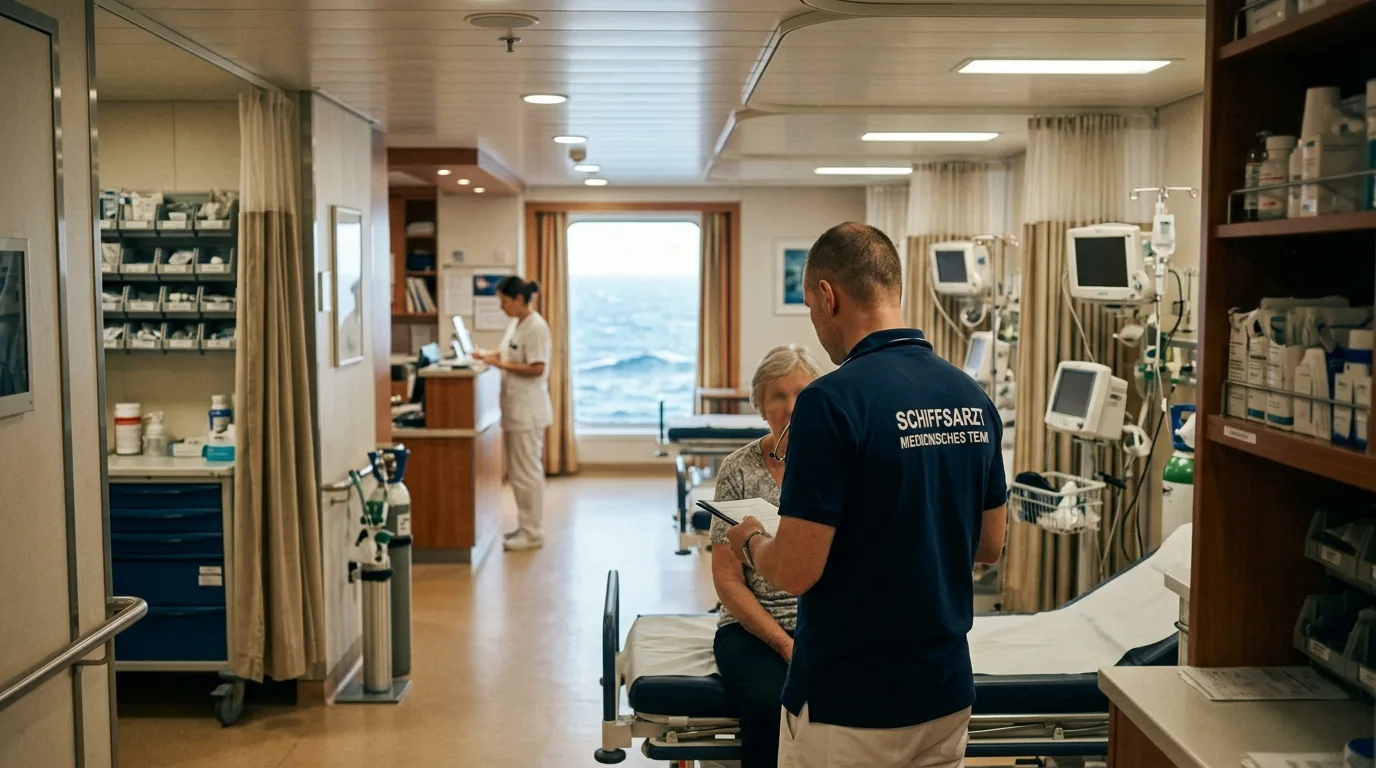
When the cruise ship leaves the port and your eyes see nothing but the vast ocean, it feels like boundless freedom. But what happens if a medical emergency suddenly occurs in the middle of the sea? For these situations, there is a state-of-the-art ship's hospital on board, usually located on the lower decks. It is far more than just a small first-aid station: equipped with modern technology, it resembles a well-stocked emergency room on land.
We spoke with an experienced ship's doctor who gave us an insight into his extraordinary daily work. Between consultation hours, emergency standby, and the rolling of the waves, the medical team on board carries a huge responsibility for both guests and crew.
What the Floating Hospital Can Do
The medical infrastructure on a modern cruise ship is surprisingly versatile. In addition to beds for inpatient monitoring, the standard equipment includes X-ray machines, laboratory equipment for rapid blood analysis, ECG machines, and defibrillators. Even a small pharmacy is integrated to dispense the most important medications directly.
- Everyday ailments: The majority of the work during daily consultation hours involves harmless infections, minor cuts, gastrointestinal issues, or classic seasickness.
- Emergency medicine: The team is trained and equipped for the initial treatment of severe emergencies such as heart attacks, strokes, or bone fractures. Patients can be stabilized and monitored under intensive care conditions.
- Dental emergencies: On many large ships, basic care is also available for acute toothaches.
When Every Minute Counts: Evacuation at Sea
Despite the good equipment, the ship's hospital has its limits. Complex surgeries or lengthy intensive care treatments cannot and must not be performed on a ship. If a patient requires long-term mechanical ventilation or needs specialists, an evacuation is initiated.
Depending on the ship's position, there are different ways to handle this. If the ship is near the coast, it will often head for the nearest port or request a rescue helicopter to hoist the patient on board. On the open sea, the ship's doctor coordinates closely with the ship's command and shoreside rescue services to organize the fastest and safest transport to a hospital on land. As a passenger, you can also follow such route changes live in your PortStory app when the ship sets course for the next port.
Important for Your Travel Budget: Billing and Insurance
An important point that many travelers underestimate is the financial side of medical treatment on board. Legally, the ship's hospital is usually treated like a private practice abroad. This means that the costs for treatments and medication are initially charged to your onboard account and must be paid at check-out.
Statutory health insurance usually does not cover these costs, or only covers a very small part – even when cruising in European waters. Therefore, international travel health insurance is absolutely essential for every cruise. When taking out a policy, make sure that the insurance also covers medically sensible repatriation to your home country. After your trip, simply submit the detailed medical bill from the ship to your insurance company for reimbursement.