Quiet Spot in Rough Seas: How to Choose the Right Cabin in Autumn
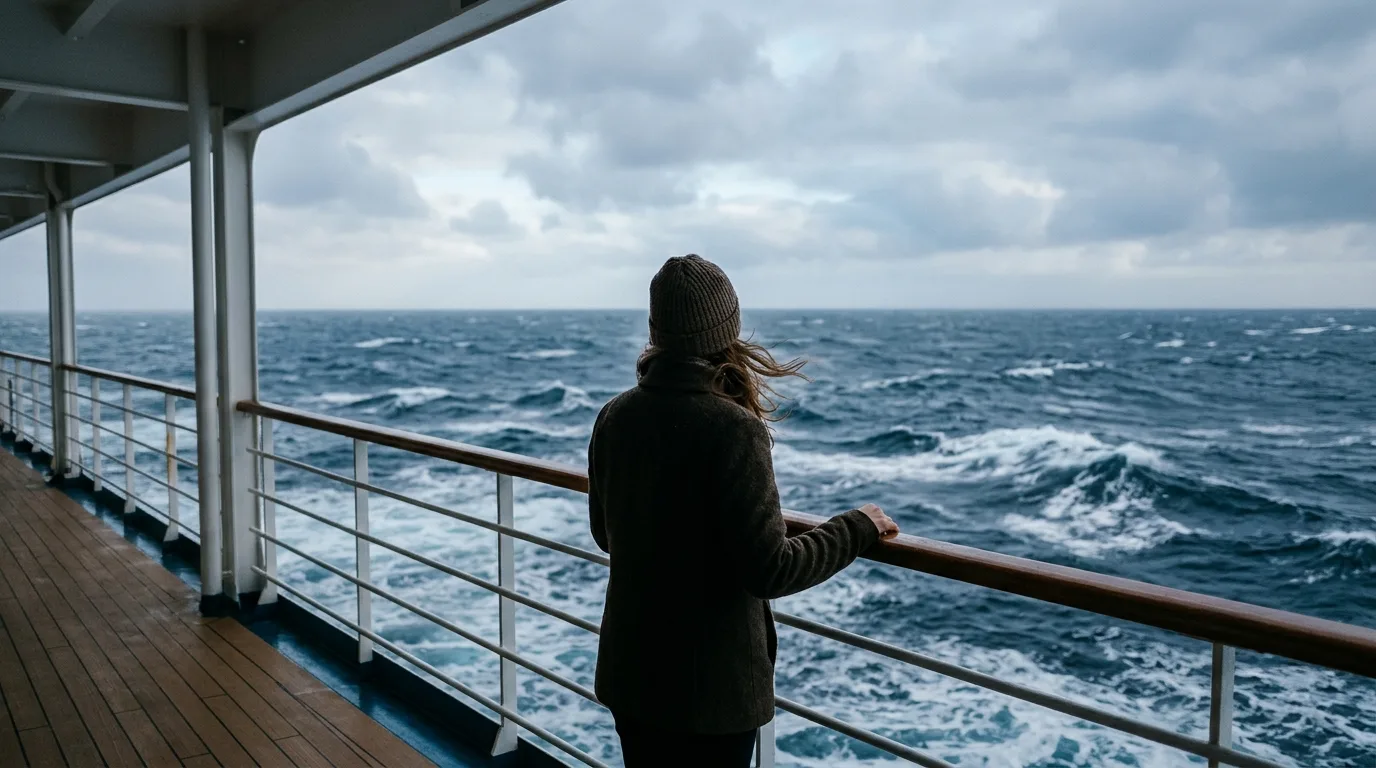
When autumn winds pick up and rough seas build across the oceans, even the largest cruise ship starts to move. This is completely normal and simply part of seafaring. However, everyone reacts differently to the swaying motion. If you are sensitive to ship movements or just want to enjoy a relaxed journey through wavy days, knowing where to position yourself on board makes all the difference. With a few simple tricks, you can easily find the spots where the ship is at its most stable.
Physics on the Water: How a Ship Moves
To understand where you will feel the least motion on board, it helps to take a quick look at how a ship moves. In rough seas, a cruise ship mainly experiences two types of motion: rolling describes the side-to-side tilting from left to right, while pitching refers to the up-and-down movement of the bow and stern.
Modern ships are equipped with stabilizers that significantly reduce rolling. Nevertheless, the laws of physics still apply: the strongest movements occur at the extreme points—at the very front of the hull, at the very back, and on the highest decks. The focal point of all movement lies deep within the center of the ship. The closer you are to this center of gravity, the less you will feel the motion of the sea.
The Quietest Cabins: Where to Sleep Soundly
By choosing the right cabin, you can ensure maximum peace and quiet even before your voyage begins. For sensitive passengers, there is a simple rule of thumb: midship and as low as possible.
- The perfect location: Opt for a cabin on the lower to middle passenger decks in the central part of the ship. Here, the vibrations and movements from rolling and pitching are at their lowest.
- Inside vs. Balcony Cabin: Central inside cabins are often located particularly close to the ship's center of gravity. A balcony cabin further down in the midship area gives you the added benefit of being able to fix your eyes on the horizon, which helps your sense of balance.
- Areas to avoid: Cabins located all the way forward in the bow feel the pitching against the waves most intensely. On the uppermost decks, the side-to-side rolling is amplified.
Public Areas Compared: Where to Spend Sea Days
Your choice of location also makes a noticeable difference during the day on sea days. When the wind picks up and the sea gets choppy, it pays to change your spot.
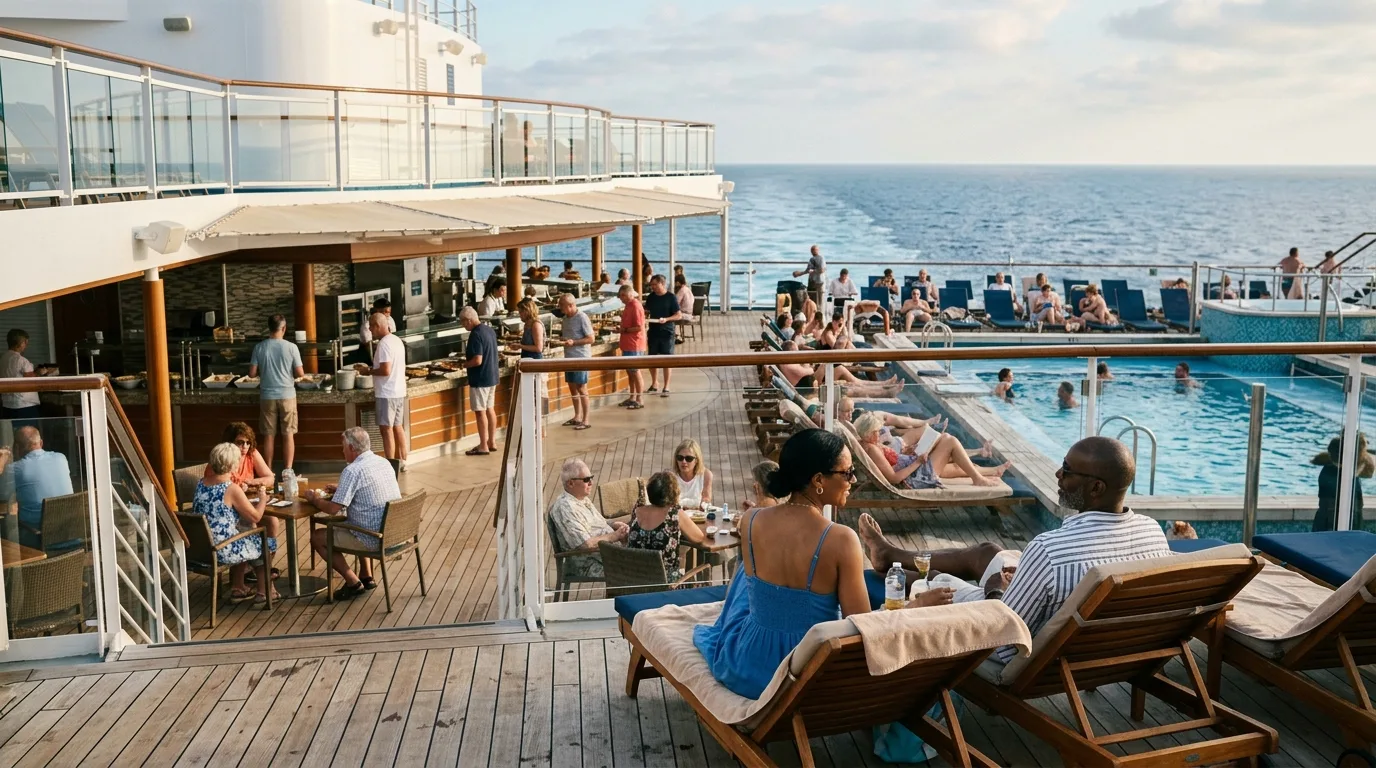
While observation lounges high up at the top of the ship offer fantastic panoramic views, they experience the most movement in rough seas. If you feel that the swaying is getting to you, it is best to move to the lower decks in the center of the ship. The promenades, atriums, or cozy lounges located there are significantly more stable. In addition, looking at the real horizon through lower-deck windows helps, as it gives your brain a clear visual cue to stay oriented.
Practical Tips When Winds Pick Up
Besides choosing the right spot, your own behavior can go a long way toward helping you enjoy your autumn sea days:
- Fresh air and the horizon: Spend time out on deck, preferably in the midship area. Keeping your eyes on the fixed horizon helps balance the signals in your inner ear.
- Light meals: An empty stomach reacts just as sensitively as an overly full one. Stick to easily digestible snacks like crackers, bread, or apples.
- Safety on board: In heavy seas, some outer decks may be closed for safety reasons. Always follow bridge announcements and crew instructions.
- Observe cruise line rules: Whether and which motion sickness remedies are handed out at reception or in the medical center varies depending on the cruise line. If in doubt, ask directly on board.
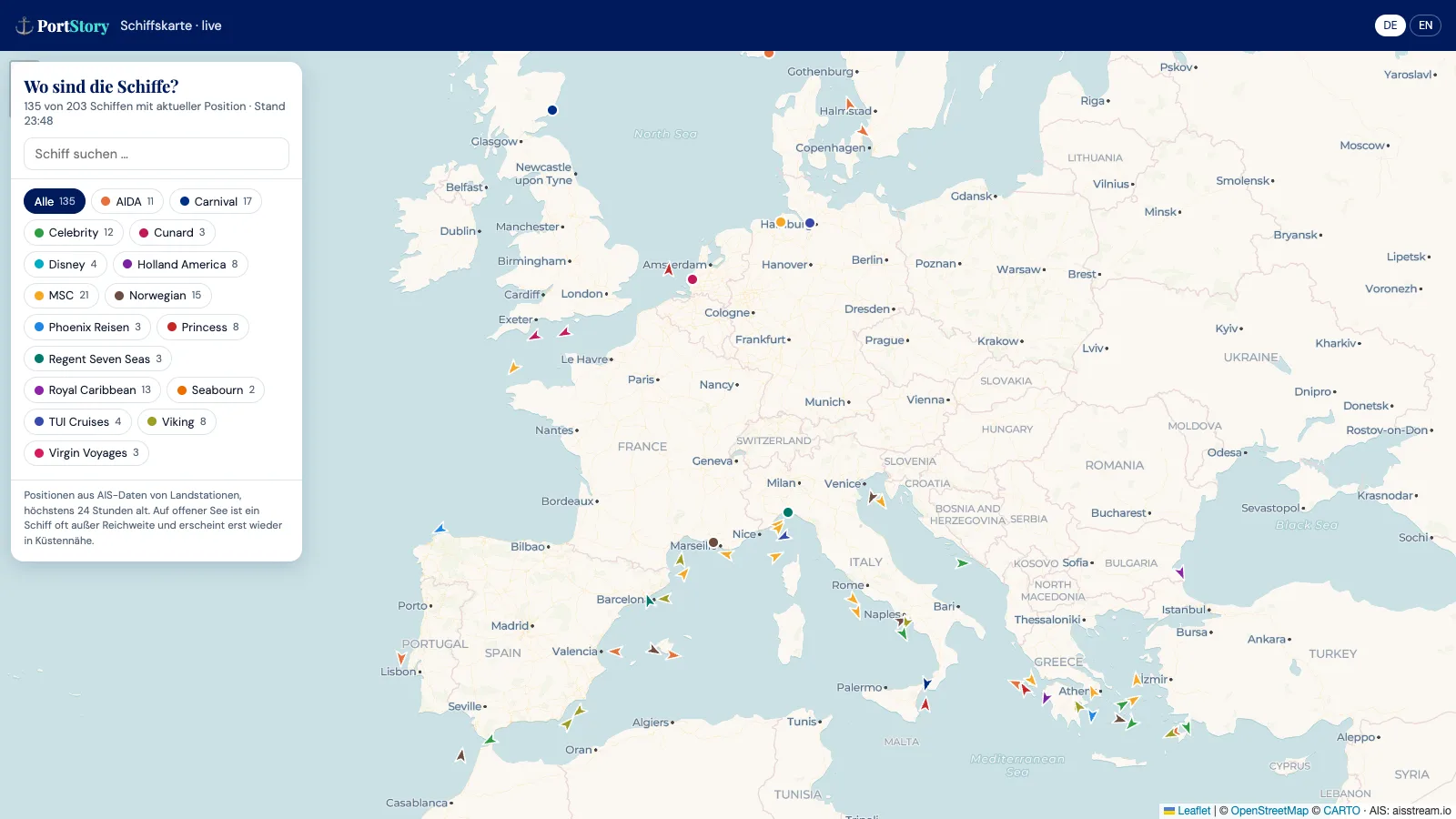
With the PortStory app, you can keep an eye on your route and the weather to prepare perfectly for your upcoming time ashore. Once you know the quiet zones of your ship, nothing stands in the way of a relaxing autumn cruise.