Perfect Vacation Photos at Sea: Photography Tips for Cruisers
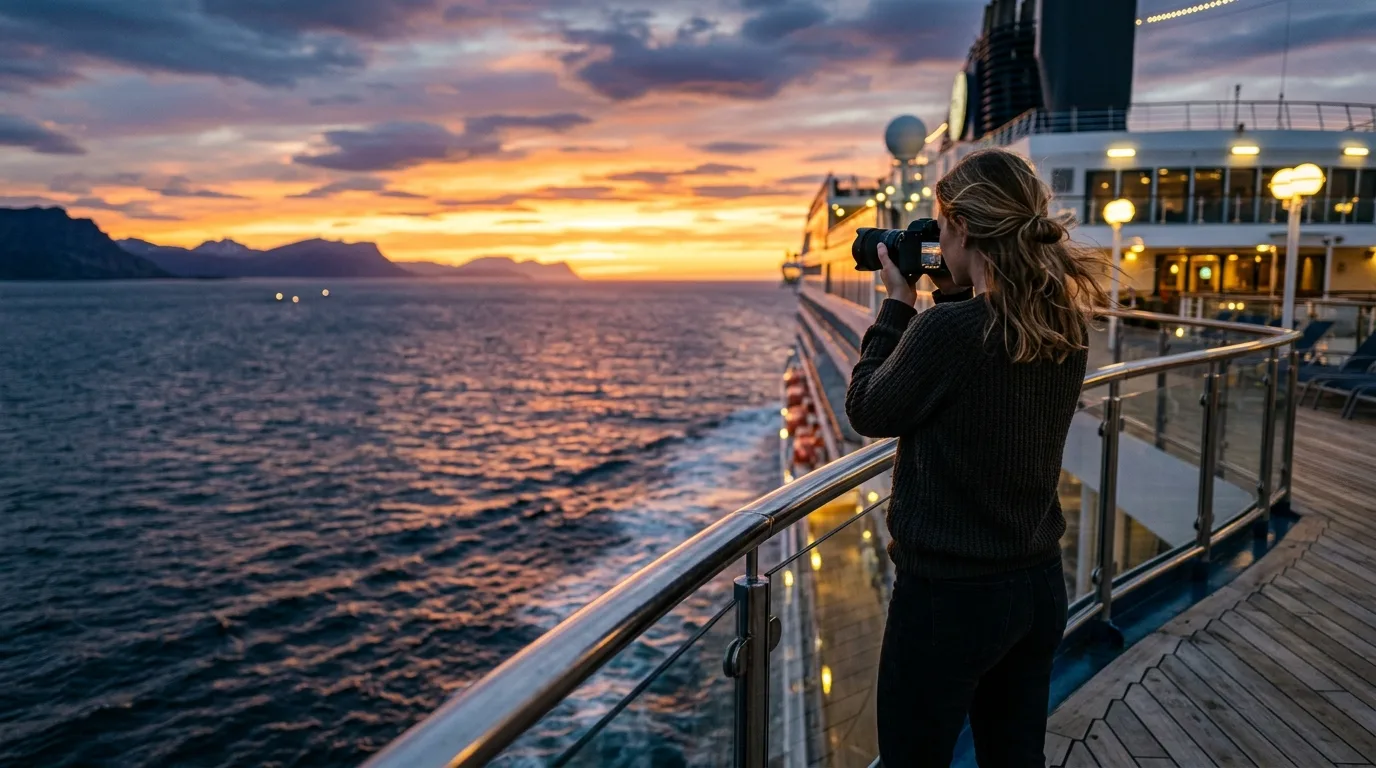
The Perfect Horizon: The Rule of Thirds on the Open Deck
We have all been there: you are standing on the open deck in the evening, the sun is slowly sinking into the sea, and you want to capture this magical moment. But in the photo, the scene suddenly looks flat, and the horizon cuts the image right down the middle.
This is where a simple but highly effective composition trick comes in: the Rule of Thirds. Imagine your image divided into nine equal squares by two horizontal and two vertical lines. Most smartphones and mirrorless or DSLR cameras allow you to display this grid directly in the viewfinder or on the screen.
For a harmonious landscape photo at sea, place the horizon on the upper or lower third line:
- If the sky is captivating with dramatic clouds or the intense colors of a sunset, place the horizon on the lower third. This gives the sky more room to shine.
- If the sea is particularly choppy, the light reflects beautifully on the waves, or another ship is passing by, set the horizon on the upper third to emphasize the water.
Also, pay meticulous attention to keeping the horizon absolutely straight. A tilted sea line is immediately noticeable and makes the image look restless.
Clear Views: Avoiding Reflections in the Observation Lounge
The panoramic windows of the observation lounge offer fantastic views of the sea or incoming ports, which you can also track on the map in your PortStory app. However, when taking photos through the glass, annoying reflections from the interior lighting often get in the way.
With these tricks, you can still get crystal-clear shots:
- Get close to the glass: Position the lens of your camera or smartphone as close to the window pane as possible. The smaller the distance, the less stray light can reflect.
- Block out the light: Use your hand, a dark jacket, or a special flexible rubber lens hood accessory to shield the lens from the ambient light coming from the room.
- Change the angle: Shoot as straight as possible, at a right angle through the glass. Angled shots increase light reflections and can lead to blurry double images.
- Turn off the flash: The built-in flash of your smartphone or camera will reflect directly off the glass, making the photo unusable. Always turn it off completely.
Magical Night Shots on a Moving Ship
Sailing through the darkness has a very special atmosphere. When the deck lights are on and the lights of the coastline drift by in the distance, you naturally want to capture this mood. However, taking night photos on a moving ship is a challenge due to the vessel's constant motion and engine vibrations.
- Ensure sufficient stability: A classic tripod quickly reaches its limits on vibrating decks, as the vibrations are transmitted directly to the camera. Instead, try to stabilize your own body. Lean against a solid wall (not directly against vibrating railings) and hold the camera or smartphone close to your body with both hands.
- Night mode and exposure time: Modern smartphones have excellent night modes that combine several quick shots. With system cameras, you should not set the exposure time too long (maximum 1/10 to 1/20 of a second), otherwise the image will be blurred by the ship's movement. Instead, increase the ISO value, even if this leads to a bit of image noise.
- Use light sources: Make use of the available light on board. The lighting on the decks, pools, or the ship's superstructure offers exciting contrasts to the dark sea and gives your camera a focal point to lock onto.
Important Notes on Drone Photography on Board
Many photography enthusiasts now own a small photo drone to capture spectacular aerial shots. However, great caution is advised here: The rules for bringing and using drones vary greatly depending on the cruise line.
With many cruise lines, carrying drones is strictly prohibited for safety reasons, or the drone must be handed over when boarding the ship and will only be returned when leaving for shore excursions. Launching and flying a drone directly from the ship is strictly forbidden by almost all operators without exception. Therefore, be sure to check the exact guidelines directly with your cruise line before your trip to avoid any inconvenience on board.
Your cruise journey in one place
Collect every port on your world map and follow ships live – free.
Read in the app →